
Faster ROI, Real Transparency: Why On-Chain Tracking Changes How Clean Energy Gets Funded
"Transparency" shows up in almost every clean energy fund's marketing material, and it almost never means what it sounds like it means. Usually it means a quarterly report. In an asset-tracked model, it means something closer to what the word actually implies — visibility into what a specific piece of infrastructure is doing, closer to real time than to a summary written weeks after the fact.
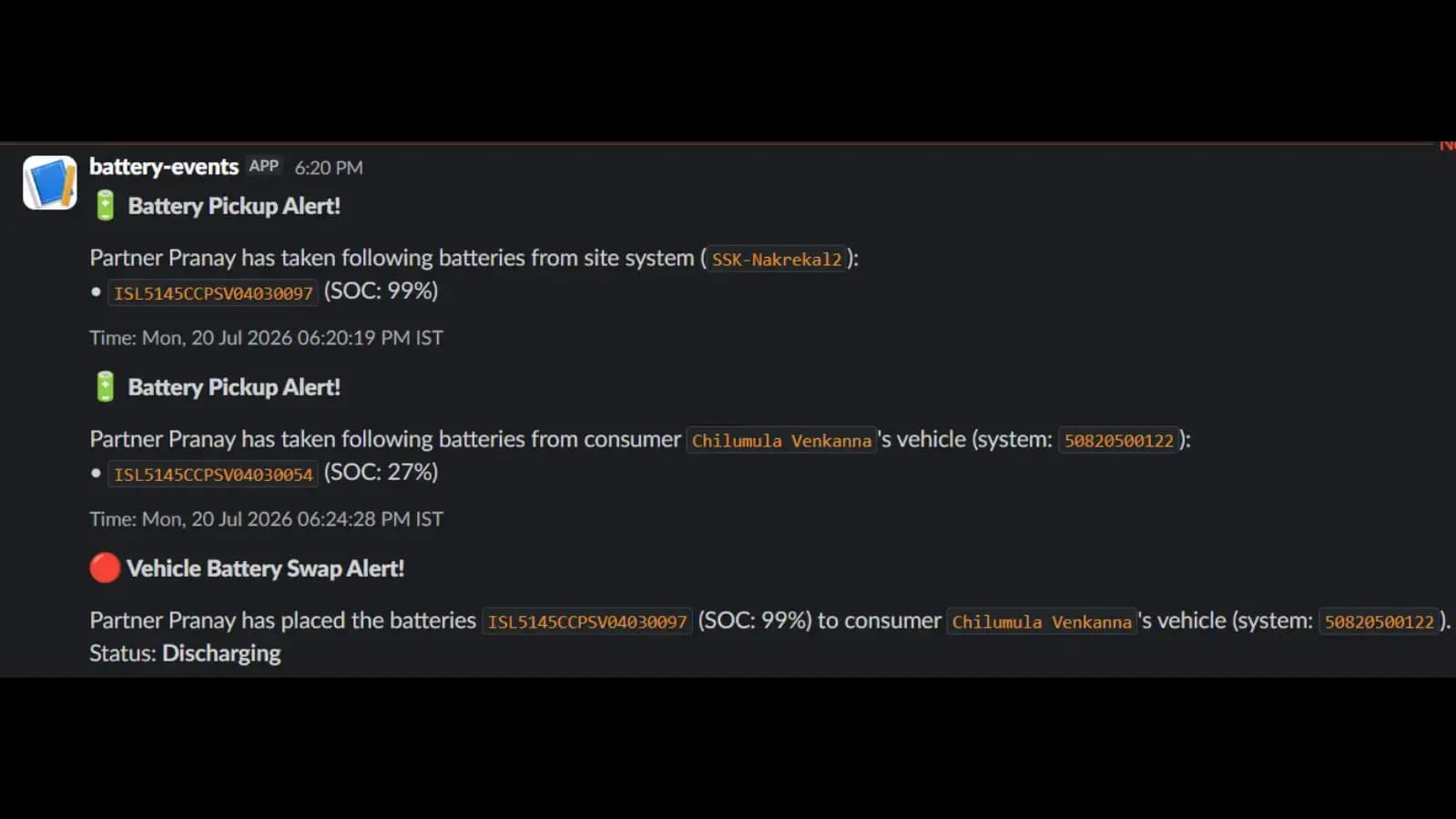
The gap between those two versions of transparency is bigger than it looks. A quarterly report tells an investor how a fund performed in aggregate over a period that's already passed — useful for after-the-fact accounting, not particularly useful for understanding whether the specific asset they funded is actually working, sitting idle, or underperforming relative to the rest of the portfolio it's bundled into. By the time underperformance shows up in a report, it's already been happening for months.
Asset-level tracking changes the granularity of what's visible. When a battery or solar unit is identifiable as a distinct asset rather than one undifferentiated piece of a larger fund, its deployment status, charging activity, and revenue generation can be tracked at the level of that individual unit — not smoothed into a portfolio-wide number that hides which specific assets are carrying performance and which are dragging on it. That's the operational meaning behind "transactional transparency": the ability to see what one asset is actually doing, not just what the fund as a whole reported last quarter.
This has a direct effect on the ROI conversation too. A large part of why infrastructure investing has historically been slow to return capital is the reporting lag itself — investors and operators alike are often working off information that's already out of date, which delays decisions about where to redeploy capital, which assets need maintenance, and which locations are actually generating demand. Closer to real-time visibility into individual asset performance shortens that feedback loop, which is part of what makes faster, more responsive capital allocation possible in the first place — deploying the next battery where the data shows demand exists, not where a report six months old suggested it might. Faster ROI, in this sense, isn't a separate feature bolted onto the model; it's a direct consequence of shortening the distance between an asset doing something and someone finding out about it.
There's a trust dimension underneath the operational one. Community-funded, asset-level infrastructure only works if the people funding individual batteries and solar units can actually verify that their asset was deployed, is operating, and is generating the revenue it's supposed to be generating. Opaque, aggregate reporting asks investors to trust that a fund is managing their capital well without giving them a way to independently check. Asset-level tracking replaces that ask with something closer to direct verification — which is a meaningfully different relationship between an investor and the infrastructure they funded.
It's worth being specific about what's actually trackable at the individual asset level, rather than treating transparency as one vague catch-all benefit. The relevant signals for a single battery or solar unit are things like deployment status — has it actually been installed at a live swap point — cycle activity, meaning how often it's charging and discharging, uptime relative to downtime, and the revenue those cycles generate before it's distributed back to whoever funded the unit. None of that requires exotic technology to track; it requires the discipline to actually record and expose it at the individual-asset level instead of only reporting a network-wide average that tells an investor nothing about their specific unit.
This also changes the operator's incentives, not just the investor's information. When individual asset performance is visible rather than buried in an aggregate number, underperforming units and underperforming locations become identifiable rather than invisible — which puts pressure on maintaining service quality at every deployment point, not just the network's best-performing ones. Aggregate reporting can mask a handful of poorly-performing assets behind a healthy overall average for a long time. Asset-level visibility makes that much harder to do, which is a structural incentive toward better operational discipline across the whole network, not just a courtesy extended to investors.
Transparency also shows up in how a network reports its own footprint, not just individual asset returns. A model built on visible, per-unit performance data can roll that same data up into network-wide impact figures — how many neighbourhoods are being served, how much energy has been consumed and produced, how many batteries are actively cycling, how much CO2 has been offset, how many green miles the network's energy has enabled. Reported this way, those figures are a direct aggregation of what individual assets are actually doing, not a separate marketing number produced independently of the underlying operations. Whether a network chooses to expose that roll-up publicly is itself a signal of how seriously it takes the transparency it claims.
Recurring incentive structures are also easier to build honestly on top of a transparent, asset-level model than on top of an opaque one. Bonus rewards, referral incentives, or participation perks tied to a clean energy network only mean something if they're layered on top of real, verifiable asset performance — otherwise they're just a discount mechanism dressed up as a reward. When the underlying revenue an asset generates is itself trackable, any additional incentive built on top of it is transparent by extension: it's visibly funded by real energy sales and real usage, not by new capital coming in to pay off earlier participants, which is the pattern that separates a legitimate incentive layer from an unsustainable one.
None of this eliminates the underlying risk in infrastructure investing — a tracked asset that's underperforming is still underperforming, transparency just means you find out sooner rather than later, and can make decisions accordingly. But that's precisely the value: transparency isn't a marketing feature layered on top of a DePIN energy network, it's the mechanism that makes community-led ownership of physical infrastructure something more than a slogan. Investors funding a battery or solar asset can only meaningfully participate in how that network performs if they can actually see how their specific piece of it is doing — and building that visibility in from the start is what separates a genuinely community-owned energy network from a fund that's simply using the language of one. It's also what turns being part of a clean energy transition from a feel-good phrase into something an investor can actually track, one battery cycle at a time.
More from GreenKWh
 DePIN
DePINWhat Is DePIN? The Infrastructure Model Behind GreenKWh's Battery Network
DePIN gets thrown around as a buzzword. Here's what it actually means for how a battery gets funded, deployed, and paid for — and why that's different from a traditional energy fund.
 Real-World Assets
Investing in a Battery: What Owning a Piece of Clean Energy Infrastructure Actually Means
GreenKWh lets you invest in a specific battery or solar asset, not a fund. Here's what happens between funding a unit and seeing a return — and what determines whether it performs.